 EN
EN

Multi-vehicle owners face unique challenges when maintaining different types of batteries across their fleet. Whether you operate motorcycles, cars, trucks, or commercial vehicles, having the right charging solution becomes critical for operational efficiency. A car battery charger 12v 24v offers the versatility needed to handle various voltage requirements without investing in multiple charging units. This dual-voltage capability eliminates the guesswork and ensures compatibility across diverse vehicle types, making it an essential tool for automotive enthusiasts and professional fleet managers alike.

Understanding Dual-Voltage Battery Charging Technology
How Dual-Voltage Systems Operate
Dual-voltage battery chargers incorporate sophisticated circuitry that automatically detects the connected battery's voltage requirements. When you connect a car battery charger 12v 24v to your vehicle, internal sensors analyze the battery configuration and adjust the output accordingly. This intelligent switching prevents overcharging damage while ensuring optimal charging rates for both 12-volt and 24-volt systems. The technology relies on voltage detection algorithms that identify whether you're charging a standard passenger vehicle battery or a heavy-duty truck battery.
The charging process involves multiple stages regardless of voltage selection. Initially, the charger provides bulk charging at maximum safe amperage until the battery reaches approximately 80% capacity. Subsequently, the system transitions to absorption charging, maintaining constant voltage while gradually reducing current flow. Finally, the maintenance phase keeps the battery at optimal charge levels without overloading the cells. This three-stage process works seamlessly across both voltage ranges, ensuring battery longevity and performance.
Safety Features in Modern Dual-Voltage Chargers
Contemporary car battery charger 12v 24v units incorporate multiple safety mechanisms to protect both the charger and connected batteries. Over-voltage protection prevents damage from power surges, while under-voltage cutoffs ensure the charger doesn't attempt to charge severely depleted batteries that might be damaged. Short-circuit protection immediately disconnects power if wiring issues occur, preventing potential fires or equipment damage.
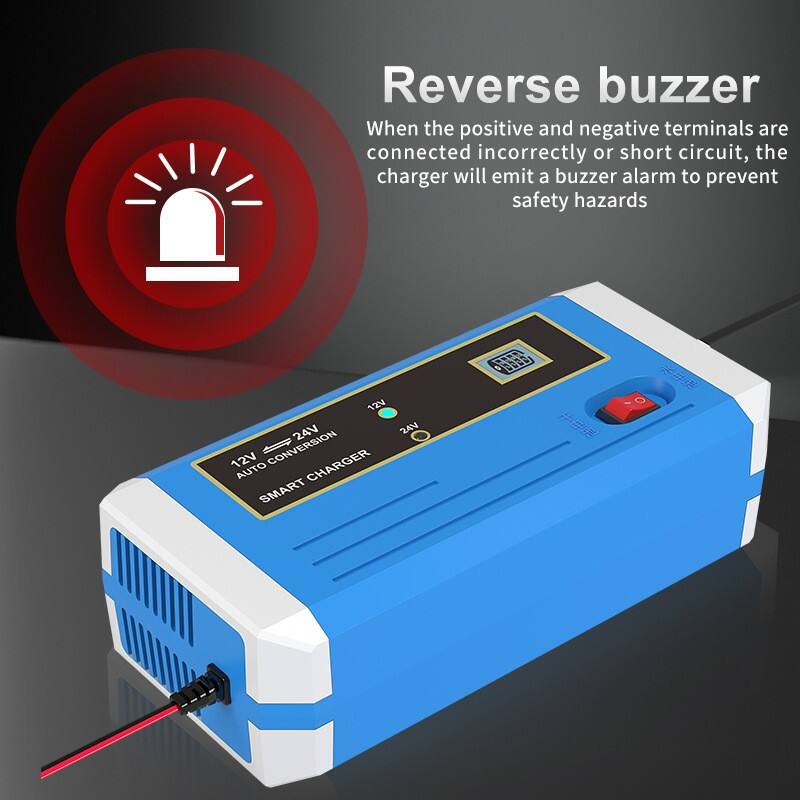
Temperature monitoring represents another crucial safety feature, as excessive heat can damage both the charger and battery. Advanced models include thermal sensors that reduce charging rates or pause operation if temperatures exceed safe thresholds. Reverse polarity protection prevents damage when connections are accidentally reversed, automatically shutting down the system until proper connections are restored. These safety features make dual-voltage chargers suitable for both professional and amateur use.
Applications Across Different Vehicle Types
Passenger Vehicles and Motorcycles
Standard passenger cars typically utilize 12-volt electrical systems, making them ideal candidates for dual-voltage chargers operating in 12V mode. Motorcycles also predominantly use 12-volt batteries, though their smaller capacity requires more careful charging management. A quality car battery charger 12v 24v automatically adjusts charging amperage based on battery size, preventing overcharging of smaller motorcycle batteries while providing adequate power for larger automotive batteries.
The compact nature of many dual-voltage chargers makes them perfect for garage use where space might be limited. Multi-vehicle owners can charge their motorcycle during winter storage periods and maintain their car batteries during extended periods of non-use. This versatility eliminates the need for separate charging equipment, reducing both storage requirements and initial investment costs.
Commercial and Heavy-Duty Applications
Commercial vehicles, trucks, and heavy machinery often require 24-volt electrical systems to power their larger engines and extensive electrical accessories. A car battery charger 12v 24v seamlessly transitions to handle these higher-voltage requirements, providing the necessary power for rapid battery restoration. Fleet managers particularly benefit from this versatility, as they can maintain diverse vehicle types with a single charging solution.
Construction equipment, agricultural machinery, and marine vessels frequently utilize 24-volt systems for enhanced power delivery. Having a dual-voltage charger means operators can service equipment batteries on-site without transporting vehicles to specialized service facilities. This capability reduces downtime and maintenance costs while ensuring equipment remains operational when needed most.
Economic Benefits of Dual-Voltage Solutions
Cost Savings Through Consolidation
Investing in a single car battery charger 12v 24v unit instead of purchasing separate 12V and 24V chargers provides immediate cost savings. Quality dual-voltage chargers cost significantly less than buying two individual units, especially when considering professional-grade equipment with advanced safety features. This consolidation also reduces storage space requirements and simplifies inventory management for commercial operations.
Long-term savings extend beyond initial purchase costs. Dual-voltage chargers typically feature robust construction designed to handle diverse applications, potentially offering longer service life than single-voltage alternatives. Reduced equipment redundancy also means fewer maintenance requirements and lower replacement part costs over time. For businesses managing multiple vehicle types, these savings can be substantial.
Operational Efficiency Improvements
Having a versatile car battery charger 12v 24v streamlines maintenance operations by eliminating the need to select appropriate charging equipment for each vehicle type. Technicians can focus on battery maintenance rather than equipment selection, reducing training requirements and potential errors. This efficiency becomes particularly valuable in high-volume operations where time savings translate directly to improved productivity.
Emergency situations also benefit from dual-voltage capability. When vehicles experience battery failures, having immediate access to appropriate charging equipment prevents extended downtime. Fleet operators can respond quickly to battery issues without waiting for specific chargers to become available, maintaining operational continuity and customer satisfaction.
Selection Criteria for Multi-Vehicle Applications
Amperage and Charging Speed Considerations
When selecting a car battery charger 12v 24v, amperage rating significantly impacts charging speed and versatility. Higher amperage units charge batteries faster but may overwhelm smaller batteries if not properly regulated. Most dual-voltage chargers offer adjustable amperage settings or automatic current regulation based on battery size and condition. A 10-amp charger typically provides optimal balance between charging speed and battery compatibility across various vehicle types.
Battery capacity also influences amperage requirements. Large truck batteries may benefit from higher charging rates, while motorcycle batteries require gentler charging currents. Quality dual-voltage chargers incorporate intelligent charging algorithms that automatically adjust current flow based on battery response, ensuring optimal charging regardless of battery size or vehicle type.
Build Quality and Durability Features
Professional-grade car battery charger 12v 24v units feature robust construction designed for frequent use and challenging environments. Look for units with metal housings, quality internal components, and proper heat dissipation systems. Weather-resistant designs become important for outdoor applications or unheated storage areas where temperature fluctuations might affect performance.
Connection quality represents another critical factor, as poor connections can cause voltage drops and charging inefficiency. Heavy-duty clamps and thick cable construction ensure reliable power transfer while withstanding repeated use. Some advanced models include quick-connect features that simplify regular maintenance routines while maintaining secure connections.
Installation and Usage Best Practices
Proper Setup Procedures
Correct installation of a car battery charger 12v 24v begins with selecting an appropriate location with adequate ventilation and protection from moisture. The charging area should provide easy access to vehicle batteries while maintaining safe distances from flammable materials. Ensure adequate electrical supply matching the charger's requirements, typically standard household current for most units.
Before connecting the charger, verify battery voltage requirements and condition. Clean battery terminals remove corrosion that might impede proper charging, and inspect cables for damage that could create safety hazards. Always connect positive terminals first, followed by negative connections, and reverse this order when disconnecting to prevent accidental short circuits.
Maintenance and Care Guidelines
Regular maintenance ensures your car battery charger 12v 24v continues operating efficiently across its service life. Keep the unit clean and dry, storing it in temperature-controlled environments when possible. Inspect cables regularly for signs of wear, cracking, or damage that might affect performance or create safety risks. Replace damaged components promptly to maintain safe operation.
Calibration checks ensure accurate voltage detection and charging rates. Many professional units include diagnostic modes that verify internal systems and charging accuracy. Following manufacturer maintenance schedules prevents problems before they occur and extends equipment life. Document maintenance activities to track performance trends and identify potential issues early.
Advanced Features for Professional Applications
Digital Monitoring and Control Systems
Modern car battery charger 12v 24v units often incorporate digital displays providing real-time charging information. These systems show current voltage, amperage, charging progress, and estimated completion times. Advanced models include data logging capabilities that track charging cycles and battery performance over time, valuable information for fleet maintenance scheduling.
Programmable charging profiles allow customization based on specific battery types and applications. Lead-acid, AGM, and gel batteries each have different charging requirements, and sophisticated chargers can optimize charging parameters accordingly. This customization ensures maximum battery life while providing reliable performance across diverse applications.
Remote Monitoring and Connectivity
Professional-grade car battery charger 12v 24v systems increasingly offer remote monitoring capabilities through wireless connectivity. Fleet managers can monitor multiple charging stations from central locations, receiving alerts about charging completion, errors, or maintenance requirements. This connectivity enables proactive maintenance scheduling and ensures vehicles remain ready for service.
Integration with fleet management systems provides comprehensive vehicle maintenance tracking. Charging data combines with other maintenance information to provide complete vehicle health profiles. This integration helps optimize maintenance schedules, predict battery replacement needs, and maintain optimal fleet availability.
FAQ
Can a dual-voltage charger damage my vehicle's electrical system
Quality dual-voltage chargers include automatic voltage detection that prevents damage to vehicle electrical systems. These units automatically identify whether your vehicle uses 12V or 24V systems and adjust output accordingly. However, always verify your vehicle's voltage requirements before connecting any charger, and ensure the charger includes proper safety features like over-voltage protection and automatic shutoff capabilities.
How long does it take to charge different battery types with a dual-voltage unit
Charging times vary based on battery capacity, depletion level, and charger amperage rating. A typical car battery might require 4-8 hours for full charging, while larger truck batteries could take 8-12 hours. Motorcycle batteries usually charge within 2-4 hours due to their smaller capacity. Most car battery charger 12v 24v units include automatic shutoff when charging completes, preventing overcharging damage.
What safety certifications should I look for in a dual-voltage charger
Look for chargers certified by recognized safety organizations like UL, CE, or FCC depending on your location. These certifications ensure the charger meets safety standards for electrical equipment. Additional features like spark-proof connections, reverse polarity protection, and thermal monitoring provide extra safety margins. Professional-grade units often exceed basic certification requirements with enhanced safety features.
Are dual-voltage chargers suitable for all battery chemistries
Most car battery charger 12v 24v units work with common lead-acid battery types including flooded, AGM, and gel batteries. However, lithium batteries require specialized charging profiles that not all dual-voltage chargers provide. Always check manufacturer specifications to ensure compatibility with your specific battery chemistry, and consider chargers with selectable battery type settings for maximum versatility across different applications.