 EN

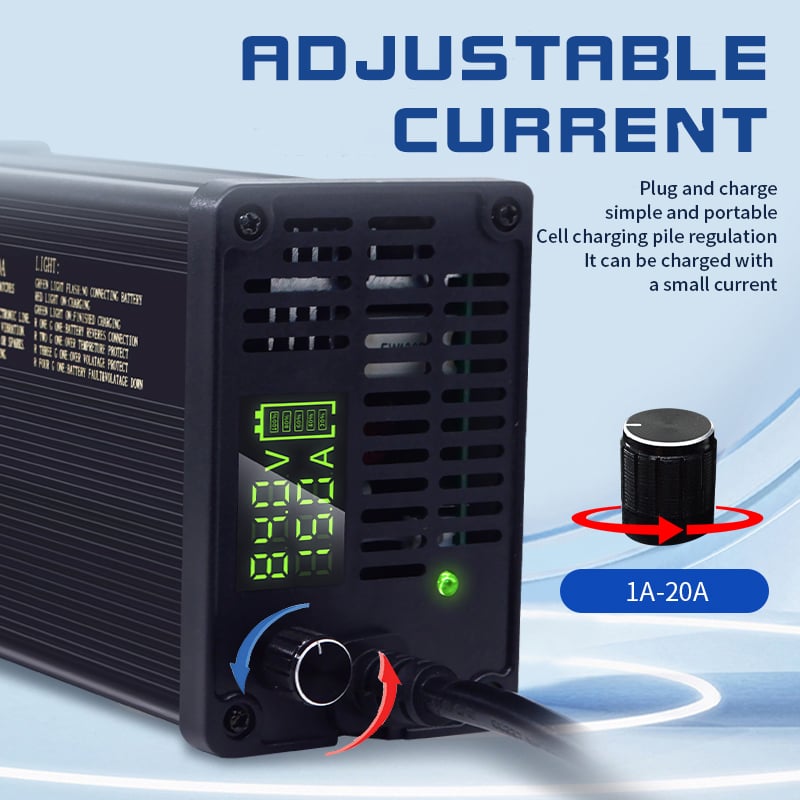
An adjustable battery charger stands as one of the most versatile power management tools in industrial, automotive, and residential applications. Unlike fixed-output chargers that deliver a constant voltage or current regardless of the battery condition, an adjustable battery charger provides flexibility to match specific charging requirements across different battery types, capacities, and chemistry compositions. This flexibility makes an adjustable battery charger indispensable for organizations managing diverse battery inventories and professionals who need precision control over the charging process.
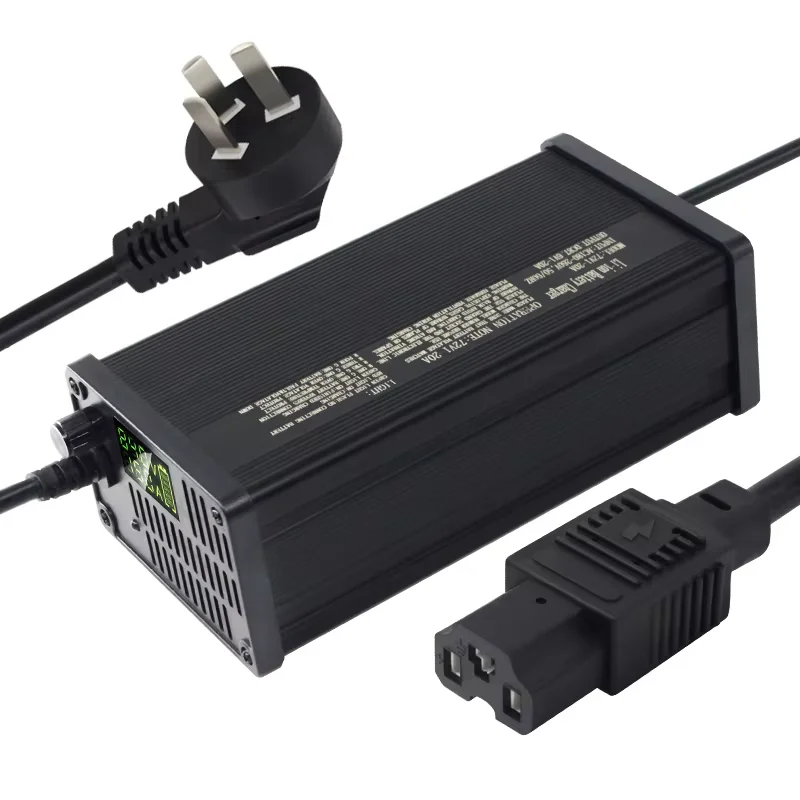
The modern adjustable battery charger market offers numerous models with varying feature sets, making it essential to understand which characteristics truly matter for your specific use case. Whether you operate in manufacturing, fleet management, emergency backup systems, or mobile equipment maintenance, selecting an adjustable battery charger with the right combination of features directly impacts charging efficiency, battery lifespan, safety, and operational cost. This guide explores the most useful characteristics that distinguish high-performance adjustable battery chargers from standard alternatives.
Voltage and Current Adjustment Capabilities
Precise Voltage Control Range
A premium adjustable battery charger must offer a wide voltage adjustment range that accommodates multiple battery types and configurations. Most industrial applications require voltage ranges spanning from 6 volts to 48 volts or higher, with fine-tuning increments that allow operators to match exact battery specifications. An adjustable battery charger with limited voltage steps forces compromises, potentially delivering excess voltage to sensitive battery systems or insufficient voltage to fully charge deeply depleted batteries. The ability to adjust voltage in small increments, often 0.1-volt steps, ensures that each adjustable battery charger application receives optimal charging parameters without over-stress or under-charge conditions.
Amperage Range and Current Limiting
Current adjustment capability defines how quickly and safely an adjustable battery charger can replenish battery capacity. A versatile adjustable battery charger should offer adjustable amperage settings from 1 amp to 30 amps or beyond, depending on battery size and chemistry. Current limiting prevents damage to sensitive battery cells and extends overall battery life by controlling the charging rate. An adjustable battery charger with programmable current limits also protects connected electronic systems from surge damage and provides safety against thermal runaway conditions that can occur when charging lithium or advanced chemistry batteries.
Smart Charging and Safety Integration
Intelligent Charging Modes and Algorithms
Modern adjustable battery charger designs incorporate intelligent charging algorithms that automatically optimize charging parameters based on real-time battery condition feedback. The best adjustable battery charger units use multi-stage charging profiles, including constant current, constant voltage, and trickle charging phases that work in sequence to maximize battery capacity recovery while minimizing stress on battery internals. Temperature compensation represents another critical feature in an adjustable battery charger, automatically adjusting voltage and current outputs as ambient or battery temperature fluctuates. An adjustable battery charger with these intelligent features reduces operator decision-making burden and significantly improves battery longevity across diverse operational environments.
Thermal Management and Protection Systems
Heat dissipation capability separates a reliable adjustable battery charger from one prone to failure during intensive use. High-quality adjustable battery charger units incorporate robust cooling systems, often featuring aluminum heat sinks, forced-air cooling, or fan-assisted thermal management that prevents component degradation. An adjustable battery charger with comprehensive thermal protection automatically reduces output current or halts charging if internal temperatures exceed safe operating limits. Additional protective layers in an adjustable battery charger include reverse polarity protection, short-circuit protection, and overvoltage regulation that collectively shield both the charger and connected battery systems from electrical faults and catastrophic failure scenarios.
Display, Interface, and Operational Convenience
Real-Time Monitoring and Digital Display
An adjustable battery charger with clear digital display capabilities provides immediate visibility into charging progress, voltage output, amperage draw, and system status. LED indicators or LCD screens on a professional adjustable battery charger enable operators to verify correct parameter selection before charging begins and monitor performance throughout the charging cycle. This transparency prevents charging errors and allows immediate detection of abnormal conditions. Some premium adjustable battery charger models include data logging features that record charging history, battery performance metrics, and maintenance alerts, supporting compliance documentation and predictive maintenance planning in industrial environments.
User-Friendly Control Interface
An effective adjustable battery charger balances feature richness with operational simplicity, offering intuitive controls that trained technicians can quickly master without extensive training. Rotary dials, push-button menus, or touchscreen interfaces on an adjustable battery charger should present voltage and current adjustments in logical sequences. An adjustable battery charger with preset modes for common battery types, such as lead-acid, lithium, or AGM formulations, accelerates setup and reduces configuration errors. Professional-grade adjustable battery charger units often include memory functions that store frequently used charging profiles, enabling one-button activation for repetitive charging applications, significantly improving workflow efficiency across maintenance teams.
Compatibility and Application Flexibility
Multiple Battery Chemistry Support
A versatile adjustable battery charger should support charging of diverse battery types without requiring different charger units for each chemistry type. Lead-acid batteries, lithium-ion systems, lithium iron phosphate cells, and nickel-metal hydride batteries each demand specific charging voltage curves and current profiles. An adjustable battery charger capable of supporting all these chemistries reduces equipment inventory costs and provides operational flexibility when battery types rotate through your facility. Many advanced adjustable battery charger models include automatic battery type detection that adjusts parameters accordingly, though manual selection through an adjustable battery charger menu system remains standard across most professional units.
Voltage Configuration Options
Industrial systems often utilize battery banks configured at various voltages, from single-cell 2-volt units to high-voltage 48-volt or 60-volt arrays commonly found in solar storage and backup power systems. A truly flexible adjustable battery charger accommodates multiple voltage configurations through physical connection options or software selection modes. Some adjustable battery charger designs feature modular output terminals that allow series or parallel connection adjustment, while others rely on digital programming to select the target output voltage. This configuration flexibility ensures that an adjustable battery charger remains valuable across diverse organizational applications without technological obsolescence as power systems evolve.
FAQ
What makes an adjustable battery charger different from a standard charger?
An adjustable battery charger provides manual or automatic control over voltage and current output, enabling customization for specific battery types and conditions. Standard chargers deliver fixed outputs regardless of battery requirements, limiting their versatility. An adjustable battery charger allows optimization for different chemistries, capacities, and charge states, resulting in faster charging times and improved battery lifespan compared to fixed-output alternatives.
How does temperature compensation improve adjustable battery charger performance?
Temperature compensation in an adjustable battery charger automatically adjusts voltage and current parameters based on ambient or battery temperature readings. As temperature increases, an adjustable battery charger reduces voltage to prevent overcharging and thermal runaway conditions. Conversely, when temperature drops, an adjustable battery charger increases voltage slightly to maintain adequate charging force. This automatic adjustment extends battery life and maintains consistent charging performance across seasonal temperature variations and different environmental conditions.
Which characteristics should I prioritize when selecting an adjustable battery charger?
Prioritize voltage range and amperage capacity matching your specific battery applications, intelligent charging algorithms for optimal battery health, robust thermal protection for safe operation, and user-friendly controls for reliable daily use. For specialized applications, verify that an adjustable battery charger supports your specific battery chemistry and includes appropriate safety certifications for your industry. A professional-grade adjustable battery charger with clear displays and preset modes typically delivers the best balance of performance and operational efficiency.