 EN

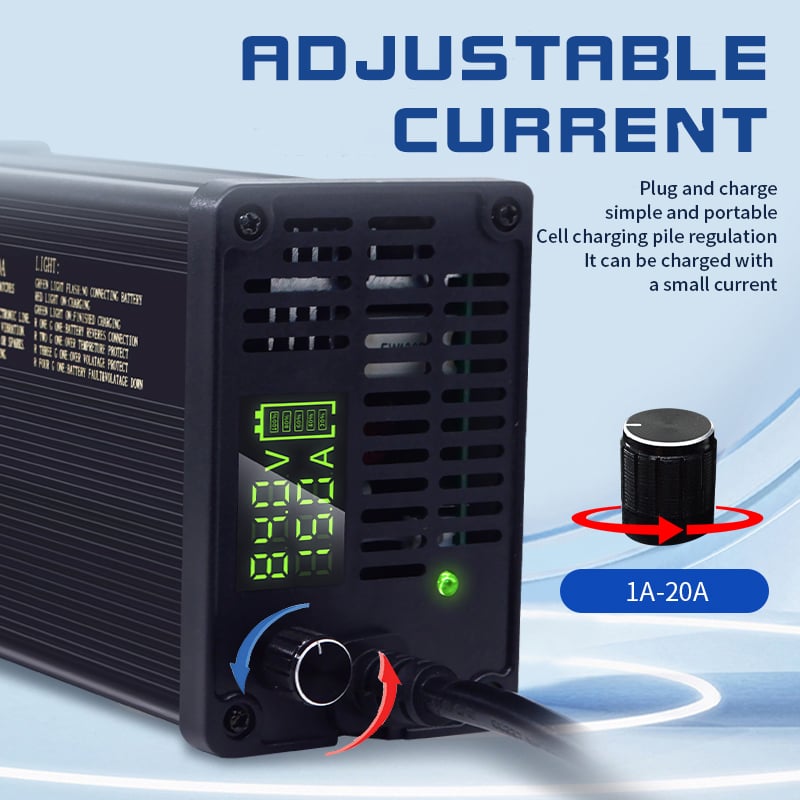
Overcharging represents one of the most damaging threats to modern battery systems, yet many users remain unaware of how to effectively manage this critical issue. An adjustable battery charger serves as the frontline defense against overcharging by allowing precise voltage and amperage regulation tailored to specific battery chemistry and capacity requirements. Unlike fixed-output chargers that apply constant power regardless of battery condition, an adjustable battery charger continuously monitors and adapts its charging profile to prevent voltage escalation that degrades battery cells and reduces lifespan.
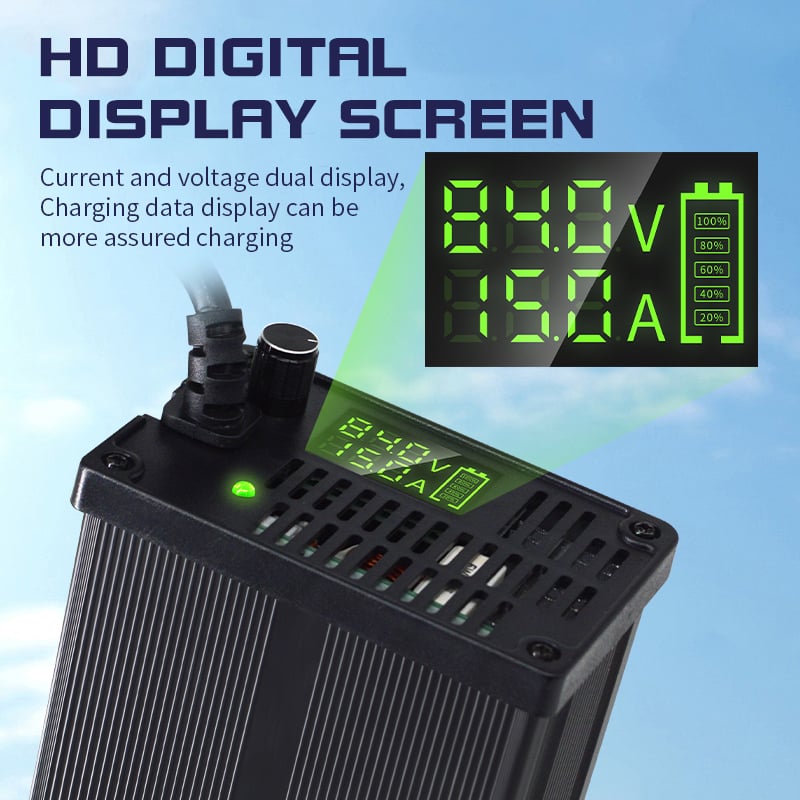
Understanding how an adjustable battery charger protects battery investment requires knowledge of charging mechanics, safety thresholds, and the intelligence built into modern charging systems. This comprehensive guide explores the mechanisms through which adjustable battery charger technology prevents overcharging, examines the voltage control strategies that make this protection possible, and details how intelligent charging systems preserve battery health across diverse applications from electric vehicles to portable electronics and industrial energy storage.
How Adjustable Battery Chargers Prevent Voltage Overload
Understanding Voltage Regulation in Battery Charging
The core function of an adjustable battery charger involves maintaining voltage output within safe parameters established by battery manufacturers. Lithium-ion batteries, for example, operate within strict voltage windows typically ranging from 2.5 volts per cell minimum to 4.2 volts per cell maximum. When conventional chargers apply constant voltage without adjustment, batteries experience cumulative stress as they approach full charge, causing electrolyte breakdown, internal resistance increase, and accelerated degradation. An adjustable battery charger implements real-time voltage monitoring that continuously measures actual battery voltage and compares it against target values, automatically reducing charging current as the battery approaches full state of charge.
Multi-Stage Charging Profiles and Safety Margins
An adjustable battery charger employs sophisticated multi-stage charging algorithms that adapt power delivery across different battery states. During the bulk charging phase, an adjustable battery charger delivers maximum safe current to quickly raise battery voltage. As the battery reaches approximately 80 percent capacity, an adjustable battery charger automatically reduces charging current while carefully managing voltage rise. This transition prevents the exponential voltage increase that occurs during the final charging window, which would otherwise trigger overcharge conditions. Advanced models include temperature compensation within the adjustable battery charger circuitry, allowing the system to lower voltage targets in cold conditions where battery chemistry demands more conservative charging parameters, and raise them slightly in warm conditions within safe operating ranges.
Intelligent Monitoring Systems That Stop Overcharging
Real-Time Battery Status Assessment
Modern adjustable battery charger technology incorporates microprocessor control that continuously evaluates multiple battery parameters simultaneously. The adjustable battery charger measures instantaneous voltage, charging current, temperature, and charge rate in real-time, feeding this data into decision algorithms that determine optimal power settings. When an adjustable battery charger detects that battery voltage has reached manufacturer-specified maximums, it immediately reduces output current toward zero, creating a natural voltage ceiling that prevents overcharge conditions from developing. This active monitoring distinguishes an adjustable battery charger from passive designs that rely on user intervention or mechanical cutoffs, making it far more reliable in protecting valuable battery assets across extended storage and charging cycles.
Termination Logic and Charge Completion Detection
An adjustable battery charger implements sophisticated termination logic that accurately detects when batteries have reached full charge state without relying on crude timer-based cutoffs. The adjustable battery charger monitors the rate of voltage increase, recognizing that as batteries approach full capacity, voltage rises more slowly despite constant current application. When this voltage rise rate drops below a predetermined threshold, the adjustable battery charger interprets this as full charge achievement and transitions to trickle charging or complete shutdown. This delta-voltage termination method, commonly found in quality adjustable battery charger designs, prevents the extended overcharging periods that severely degrade battery chemistry, extend charging times unnecessarily, and waste energy resources in industrial and commercial applications.
Applications Where Adjustable Battery Charger Protection Matters Most
Electric Vehicle and Energy Storage Systems
Electric vehicles depend on sophisticated battery management systems where an adjustable battery charger plays a critical role in fleet reliability and operational costs. Vehicle charging infrastructure increasingly incorporates adjustable battery charger technology capable of communicating with onboard battery management systems to establish optimal charging parameters specific to each vehicle's battery state, temperature, and cycle history. An adjustable battery charger in these applications prevents overcharging scenarios that would reduce usable battery capacity by 5 to 10 percent per year, directly impacting vehicle range and ultimately requiring premature battery replacement costing thousands of dollars. Stationary energy storage installations serving renewable energy integration and grid stabilization functions similarly benefit from adjustable battery charger systems that optimize thousand-cycle battery lifespans while maintaining peak power availability.
Industrial Equipment and Backup Power Reliability
Industrial facilities relying on uninterruptible power supplies and backup battery systems depend on an adjustable battery charger to maintain emergency power readiness while protecting battery investments that often represent significant capital equipment. Manufacturing plants, data centers, and telecommunications infrastructure cannot tolerate battery failures caused by overcharging, as downtime consequences extend far beyond replacement costs to include production losses, service disruptions, and reputational damage. An adjustable battery charger installed in these critical applications ensures that standby batteries remain in optimal condition through years of seasonal temperature fluctuations, varying load patterns, and extended storage periods. The intelligent adaptive nature of an adjustable battery charger means these systems automatically compensate for environmental changes without requiring manual adjustment by maintenance personnel, reducing operational complexity and human error in battery care protocols.
FAQ
What specific voltage levels should an adjustable battery charger maintain for different battery types?
Different battery chemistries require precise voltage profiles that an adjustable battery charger must deliver accurately. Lithium-ion batteries typically operate within 4.15 to 4.25 volts per cell maximum depending on chemistry variant, while lead-acid batteries tolerate 14.4 to 14.8 volts for 12-volt systems. An adjustable battery charger designed for specific battery types includes manufacturer voltage specifications in its programming, allowing the charging system to optimize protection while maximizing usable capacity. Attempting to charge different battery types with an incorrect adjustable battery charger setting risks severe overcharging damage, so verifying compatibility between charger specifications and battery requirements remains essential before connection.
How does temperature affect an adjustable battery charger's ability to prevent overcharging?
Temperature significantly influences battery chemistry and optimal charging parameters, which quality adjustable battery charger systems account for through thermal compensation algorithms. Cold temperatures reduce battery internal conductivity and require slightly lower charging voltages to prevent cell stress, while warm temperatures allow marginally higher voltages without damage risk. An adjustable battery charger equipped with temperature sensors automatically adjusts its voltage output across the operating range, typically lowering targets by approximately 3 millivolts per degree Celsius below 25 degrees and raising them above ambient. This temperature-aware operation ensures an adjustable battery charger prevents overcharging across seasonal variations and diverse climate zones where industrial equipment operates, maintaining battery longevity regardless of environmental conditions.
Can an adjustable battery charger eliminate the need for battery management systems on electric vehicles?
While an adjustable battery charger provides essential overcharge protection during charging events, it operates as a complementary system rather than a replacement for onboard battery management systems in electric vehicles. An adjustable battery charger controls the charging process at the connection interface, but vehicle battery management systems monitor cell-level conditions, perform balancing operations, and protect against overcharge during vehicle operation when the charger remains disconnected. Modern electric vehicles benefit most from both technologies working together, where the adjustable battery charger manages charging port interaction and initial power delivery, while onboard systems handle real-time protection and advanced diagnostics. This layered approach to battery protection using an adjustable battery charger combined with vehicle systems ensures comprehensive safeguards against overcharging throughout the vehicle lifecycle.
Table of Contents
- How Adjustable Battery Chargers Prevent Voltage Overload
- Intelligent Monitoring Systems That Stop Overcharging
- Applications Where Adjustable Battery Charger Protection Matters Most
-
FAQ
- What specific voltage levels should an adjustable battery charger maintain for different battery types?
- How does temperature affect an adjustable battery charger's ability to prevent overcharging?
- Can an adjustable battery charger eliminate the need for battery management systems on electric vehicles?