 EN
EN

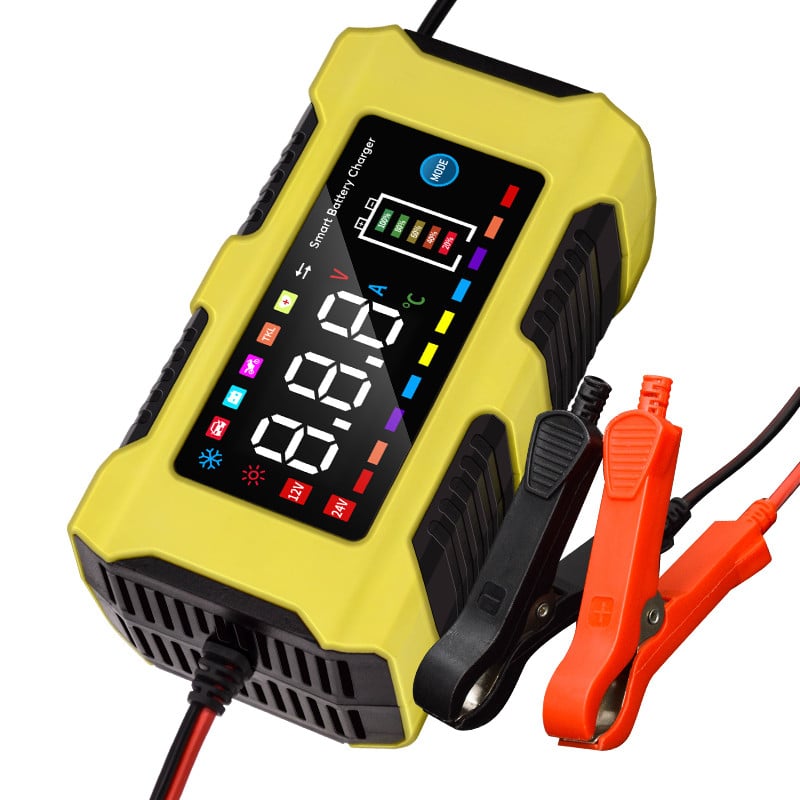
Selecting the right car battery charger requires understanding the specific needs of your vehicle, the type of battery chemistry, and your charging environment. A proper charger ensures faster recovery time, extends battery lifespan, and prevents damage from overcharging or undercharging. Whether you own a standard sedan, truck, or motorcycle, the selection process involves evaluating voltage requirements, amperage capacity, portability, and safety features that match your operational demands.

The automotive industry offers multiple charging solutions, from simple trickle chargers to intelligent smart chargers and high-capacity jump starters. Understanding how to charge a dead car battery and the best portable jump starter options available helps fleet managers, mechanics, and vehicle owners make informed purchasing decisions. This guide walks through car battery charger types and specifications, helping you identify the solution that best fits your requirements.
Understanding Car Battery Charger Types and Specifications
12V and 24V Voltage Standards
Most standard passenger vehicles use 12-volt battery systems, while heavy trucks, commercial vehicles, and industrial equipment commonly require 24-volt systems. A car battery charger must match your vehicle's voltage to function safely and effectively. Selecting a charger with the wrong voltage can damage electrical components or fail to charge the battery entirely. Industrial operations often need dual-voltage capability or separate units for different fleets, making voltage compatibility the first critical specification to verify.
Amperage Ratings and Charging Speed
Amperage capacity determines how quickly a car battery charger delivers energy to your battery. Standard household chargers typically range from 2 to 10 amperes, while best portable jump starter units often provide 50 amperes or higher for emergency quick-start capability. Higher amperage chargers reduce charging time but generate more heat, requiring robust thermal management and advanced protection circuits. Selecting the correct amperage depends on your battery size, available power source, and time constraints for getting back on the road.
Charger Technology and Safety Features
Smart Charging and Protection Systems
Modern car battery charger types incorporate intelligent microprocessor control to monitor voltage, current, and temperature in real time. Protection features like overvoltage protection (OVP), overcurrent protection (OCP), and short-circuit protection (SCP) prevent damage to vehicle electronics and battery cells. These safety mechanisms are especially important when learning how to charge a dead car battery in confined spaces or when ambient temperatures are extreme. Electric fireproof design and thermal shutdown features add an essential layer of reliability for commercial and personal use.
Portable Jump Starter Capabilities
A best portable jump starter combines traditional charging capability with emergency start functionality, delivering rapid current surges to instantly crank a dead engine. These hybrid devices store energy in internal batteries or capacitor banks and can restart a vehicle without waiting for extended charging cycles. Many modern units include integrated displays, digital fuel gauges showing charge status, and USB outlets for charging mobile devices. Portability makes these systems ideal for roadside emergencies, fleet maintenance, and backup power solutions across multiple vehicle types.
Selecting Based on Vehicle Type and Application
Consumer Vehicles and Standard Usage
Typical passenger car owners benefit most from a balanced car battery charger offering 8 to 10 amperes with automatic charging mode and LED indicator lights. These chargers work efficiently with lead-acid batteries commonly found in standard sedans and compact vehicles. For home garages or small fleet operations, a best portable jump starter adds convenience when traditional charging isn't immediately accessible. The combination of reliable charging and emergency start capability provides versatility without excessive cost or complexity.
Commercial and Heavy-Duty Applications
Commercial fleet operators and industrial facilities require industrial-grade car battery charger types with 24-volt capability, higher amperage options, and robust construction for continuous duty cycles. These units often feature remote monitoring, automatic voltage switching, and isolation transformers for multi-vehicle charging configurations. Understanding how to charge a dead car battery in a busy shop environment means selecting equipment that handles repeated cycles without performance degradation. Heavy-duty vehicles with dual 12-volt batteries or equipment-specific power systems demand chargers engineered for specialized applications.
Practical Selection Criteria and Implementation
Evaluating Power Source and Installation Requirements
Your available power supply determines which car battery charger types are practical for your location. Standard household outlets (120 volts) support smaller chargers, while 240-volt industrial outlets enable higher amperage and faster charging. Portable jump starter units eliminate power source limitations by operating from internal batteries, making them invaluable for roadside service. Consider whether your workspace supports permanent installation, requires portability, or needs backup capability when grid power is unavailable. Temperature control and ventilation are equally important when operating chargers in workshops or vehicles during charging sessions.
Matching Charger Specifications to Battery Chemistry
Lead-acid batteries, the most common automotive type, require different charging profiles than newer lithium-ion or absorbed glass mat (AGM) batteries. A quality car battery charger automatically detects battery chemistry and adjusts charging parameters accordingly through smart microprocessor control. AGM and gel batteries demand lower charging voltages and gentler current curves than standard flooded lead-acid cells. Selecting a charger with automatic battery type detection prevents premature cell degradation and extends service life by maintaining optimal charging conditions throughout each cycle.
FAQ
What is the difference between a charger and a best portable jump starter?
A traditional car battery charger slowly replenishes charge over hours by delivering steady current from an external power source. A best portable jump starter provides both charging capability and high-current emergency starting power, either through internal battery storage or advanced capacitor technology. Jump starters start engines immediately without waiting for full charge recovery, while traditional chargers require connection to AC power and longer charging windows.
How do I know which car battery charger types and specifications match my vehicle?
Check your vehicle's owner manual or battery label for voltage (12V or 24V) and reserve capacity (Ah) specifications. A car battery charger amperage should typically range from 10 to 50 percent of the battery's amp-hour rating for safe, controlled charging without overheating. Heavier vehicles and commercial fleets may need higher amperage options and 24-volt capability, while standard passenger cars typically function well with 12-volt, 8 to 10-ampere chargers.
Can I use how to charge a dead car battery advice for all battery types?
The fundamental process remains similar, but smart chargers automatically adjust voltage and current profiles based on battery chemistry detected during connection. Lead-acid, AGM, gel, and lithium batteries each require different charging curves to avoid damage and optimize lifespan. Always verify that your car battery charger supports the specific chemistry in your vehicle before connecting, and consult manufacturer guidelines for specialty batteries in modern electric vehicles or high-performance applications.